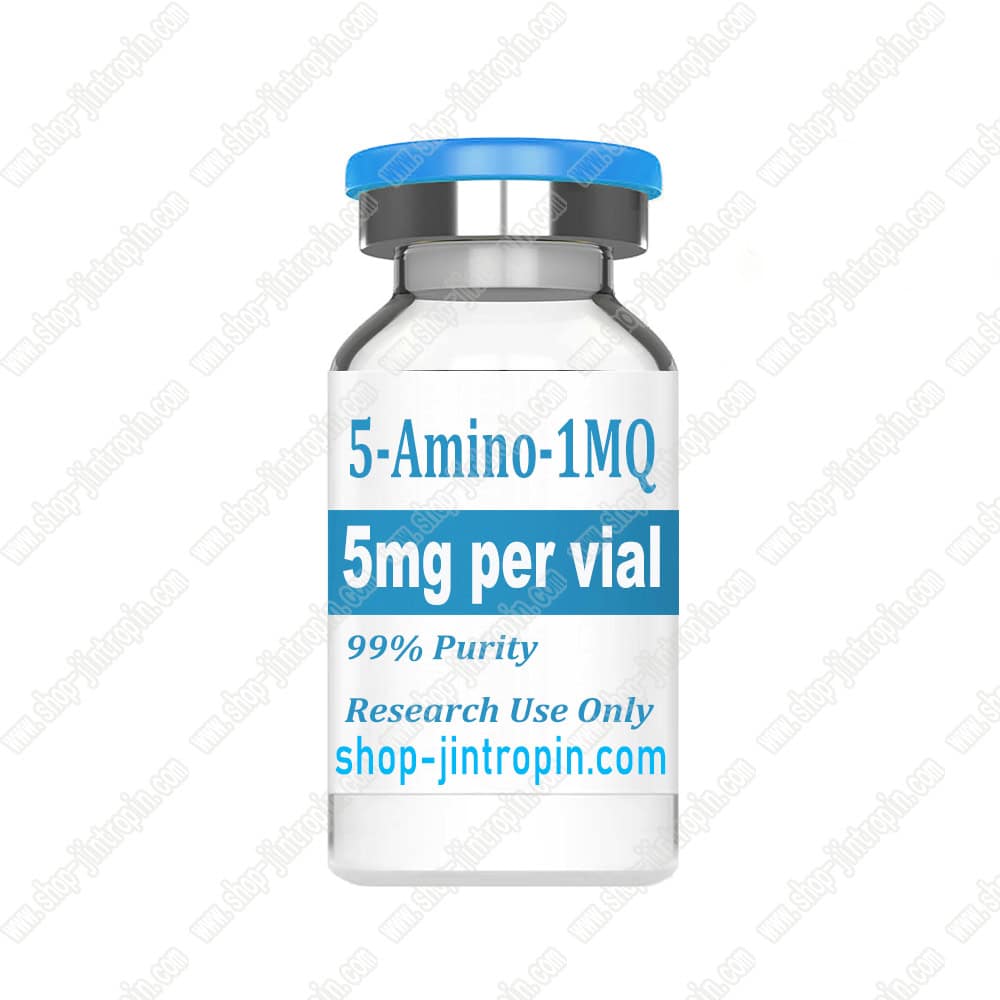
5-amino-1mq 10mg 10vials
Original price was: $330.00.$85.00Current price is: $85.00.
5-Amino-1MQ is rapidly gaining recognition among medical professionals, wellness advocates, and fitness enthusiasts in the United States.
100% delivery
- Satisfaction Guaranteed
- No Hassle Refunds
- Secure Payments
Description
5-Amino-1MQ
How It Works
Standard Dosage Range:10?C25 mg per day, split into 1?C2 subcutaneous injections. Personalized Dosage:Use a 5 amino 1 mq dosage calculatoror consult a healthcare professional for tailored protocols. Dosing Protocol:Recommended to start with the lowest effective dose and titrate upward.
Product Specifications
- Contents: 10mg 10vials
- Appearance: Lyophilized powder
- Storage: 2-8??C (refrigerated)
Recommended Dosage & Protocol
| Protocol | Dosage | Frequency | Duration |
|---|---|---|---|
| Protocol 1 | 10?C25 mg | As needed | Titrate upward |
| Protocol 2 | See protocol | As needed | Titrate upward |
Safety & Research Considerations
Storage & Handling
Store lyophilized peptide powder in a cool, dry place at 2-8 degree C (refrigerate). After reconstitution with bacteriostatic water, keep refrigerated and use within the recommended timeframe. Protect from light and moisture. Do not freeze the reconstituted solution. Keep the product in its original packaging until ready for use.
Stacking & Combinations
How to Spot Authentic Product
Frequently Asked Questions
(5-Amino-1-Methylquinolinium) is a small molecule compound ?? not a peptide ?? that inhibits the enzyme nicotinamide N-methyltransferase (NNMT). With a molecular weight of approximately 159 Da, it is far smaller than even the smallest peptides (which typically start around 500?C1,000 Da). It is sold by peptide vendors and discussed in peptide communities, which leads to frequent misidentification, but it contains no amino acid chain and is not a peptide by any chemical definition. NNMT is an enzyme overexpressed in adipose (fat) tissue and certain metabolic disorders. It catalyzes the methylation of nicotinamide, consuming S-adenosylmethionine (SAM) and reducing intracellular NAD+ availability. By inhibiting NNMT, 5-Amino-1MQ increases NAD+ levels, enhances cellular energy metabolism, and shifts fat cell activity from lipid storage toward lipid oxidation. This mechanism of action makes it of significant interest for fat loss, body recomposition, metabolic health, and NAD+-mediated longevity pathways. A key practical advantage of 5-Amino-1MQ is its oral bioavailability. Unlike most peptides, which require reconstitution with bacteriostatic water and subcutaneous injection, 5-Amino-1MQ is taken as a simple oral capsule ?? no needles, no reconstitution, no refrigeration required for the capsule form. Use our Peptide Dosage if you are working with liquid or injectable forms. Dosing information in this guide is derived from preclinical studies and community protocols ?? not from human clinical trials. Not a peptide. 5-Amino-1MQ is a small molecule quinolinium compound (~159 Da). It appears in this guide series because it is widely sold by peptide vendors and discussed alongside peptides in research communities. Do not attempt to reconstitute or inject oral capsule formulations ?? oral administration is the standard route. Key Characteristics: Small molecule, NOT a peptide ?? molecular weight ~159 Da; a quinolinium-based compound with no amino acid chain. Frequently miscategorized as a peptide because it is sold by peptide vendors NNMT inhibitor ?? inhibits nicotinamide N-methyltransferase, an enzyme overexpressed in adipose tissue that promotes fat storage and reduces NAD+ levels NAD+ booster ?? by blocking NNMT, 5-Amino-1MQ preserves and increases intracellular NAD+, supporting energy metabolism, DNA repair, and sirtuin activation Metabolic shift ?? redirects fat cell metabolism from lipid storage toward lipid oxidation, supporting fat loss and body recomposition when combined with caloric deficit Oral bioavailability ?? taken as a simple oral capsule ?? no reconstitution, no injection, no bacteriostatic water. This is a major practical advantage over injectable peptides Adipose tissue selectivity ?? NNMT is most highly expressed in white adipose tissue, making the compound??s effects preferentially directed at fat cells For a complete overview of its mechanism and research, see our full 5-Amino-1MQ profile. New to peptides and research compounds?
Start with the Beginner's Guide to Peptides . How 5-Amino-1M
Dosage Is Determined 5-Amino-1MQ dosing ?? expressed in milligrams (mg) per day taken orally ?? is derived from preclinical animal studies, allometric scaling from rodent models to estimated human equivalent doses, and community experience. No human clinical trials have established an official dosing regimen. The commonly used 50?C150 mg daily range is based on translated research data and several years of anecdotal reporting. Key research by Neelakantan et al. (2017, 2018) and Kraus et al. (2014) investigated NNMT inhibition in rodent models of obesity and metabolic dysfunction. These studies used 5-Amino-1MQ and related NNMT inhibitors at doses of 10?C20 mg/kg administered via intraperitoneal (IP) injection in mice. Results demonstrated significant reductions in body weight, adipose tissue mass, and adipocyte size, along with increased NAD+ levels and improved metabolic markers. Allometric Scaling to Human Doses Using standard mouse-to-human allometric conversion factors (dividing the mouse dose by approximately 12.3 to account for surface area differences), effective mouse doses of 10?C20 mg/kg translate to a human equivalent dose of roughly 50?C100 mg per day for a 60?C80 kg adult. Community protocols have settled around this range, with 100 mg per day being the most commonly cited dosage. Community & Practitioner Experience Over the past several years, 5-Amino-1MQ has gained popularity in the peptide and metabolic optimization community. The 100 mg once-daily oral protocol has emerged as the most widely used regimen based on user reports. Some users titrate up to 150 mg for enhanced fat loss effects, while those focused on NAD+ optimization and longevity often use lower doses of 50?C100 mg. Strength of evidence: Low to Moderate. Preclinical studies consistently show NNMT inhibition reduces adiposity and improves metabolic markers in rodent models. However, no human clinical trials have been published for 5-Amino-1MQ specifically. Dosing protocols are derived from allometric scaling and community consensus. Results are promising but not yet validated in controlled human studies. Standard 5-Amino-1MQ Dosage Ranges Because 5-Amino-1MQ is a small molecule taken orally (not an injectable peptide), dosing is straightforward ?? measured in milligrams per day. Most capsules are sold in 50 mg units. The table below summarizes the commonly used protocols. Dosage Selection: Start at 50 mg once daily for the first 1?C2 weeks. If well tolerated, increase to 100 mg ?? this is the dose most users settle on. Doses above 150 mg provide diminishing returns and increase the risk of side effects. Take in the morning to avoid sleep disruption. Unlike injectable peptides, no reconstitution or syringe math is needed for oral capsules. Verified sources for 5-Amino-1MQ These vendors are vetted by Peptide Wiki for purity testing and COA transparency. Swiss Chems 10% off PEPTIDEWIKI Limitless Biotech Premium nootropics & research peptides 15% off PEPTIDEWIKI Limitless Biotech 15% off PEPTIDEWIKI CH Peptides Research-grade peptides with COA transparency 10% off PEPTIDEWIKI CH Peptides 10% off PEPTIDEWIKI View all vendor deals ?? Affiliate links. Commission at no extra cost. Calculate Your 5-Amino-1MQ Dose For oral capsules, dosing is simple ?? capsules are pre-measured (typically 50 mg each), so no reconstitution or syringe calculations are needed. Simply count capsules to reach your target dose. The table below shows common capsule counts. Capsule size: 50 mg per capsule (most common) Capsules per day: 100 ?? 50 = 2 capsules Monthly supply needed: 2 capsules ?? 30 days = 60 capsules Monthly Supply Table (50 mg Capsules) Liquid or injectable forms?
If you are using a li
uid solution or injectable form of 5-Amino-1MQ (less common), use our calculator to determine the exact volume per dose based on concentration. Skip the Math ?? Use Our For liquid or injectable forms, enter your vial size, concentration, and desired dose ?? get instant calculations with zero manual math. 5-Amino-1MQ Forms & Preparation Unlike injectable peptides, 5-Amino-1MQ is most commonly used as a pre-made oral capsule. No reconstitution with bacteriostatic water is required for capsule form. Here are the forms available and their preparation requirements. Pre-measured capsules, typically 50 mg 5-Amino-1MQ Dosage Chart & Schedule Guide. 5-Amino-1MQ is a selective NNMT (nicotinamide N-methyltransferase) inhibitor that boosts NAD+ levels, reduces fat cell size, and enhances metabolic function. Available as a lyophilized powder in 10 mg vials, it is administered via daily subcutaneous injection. Dose per injection, frequency, and total weekly amount across experience levels. Syringe units assume a 10 mg vial mixed with 1 mL of bacteriostatic water (10 mg/mL). Use the calculator below for your exact setup. per injection ?? 15 ?C 30 units All protocols follow a 5-on / 2-off injection pattern. Inject Monday through Friday, rest on weekends. 5-Amino-1MQ Reconstitution Calculator Enter your vial size, how much water you added, and the dose you want ?? we ?? ll tell you exactly how much to draw. Double-click a preset to edit it Double-click a preset to edit it Double-click a preset to edit it Ultra-fine, best for small doses ?C recommended for 5-Amino-1MQ Your 0.3 mL syringe only holds 30 units. You'll need 2 injections of ~ 25 units each to get your full 5 mg dose. 0.3 mL Syringe (showing per shot ?? 2 shots total) 5-Amino-1MQ inhibits NNMT, an enzyme overexpressed in fat tissue. Blocking NNMT increases intracellular NAD+ and SAM levels, which promotes fat cell shrinkage, improved energy metabolism, and enhanced cellular function. Inject subcutaneously using a 0.3 mL (31G) insulin syringe. Rotate between abdomen, outer thigh, and upper arm. Inject slowly over 2 ?C 3 seconds. Best administered in the morning. Run 6 ?C 8 week cycles followed by a 2 ?C 4 week break. No PCT is required as 5-Amino-1MQ does not affect hormonal pathways. Cycling helps maintain receptor sensitivity. Store unreconstituted vials at 2 ?C 8 ??C. After mixing with bacteriostatic water, refrigerate and use within 3 ?C 4 weeks. Never freeze the reconstituted solution. Often combined with other fat-loss and metabolic peptides like MOTS-c, Tesamorelin, or CJC-1295/Ipamorelin. Works through a different pathway (NNMT vs. GH/AMPK), making it complementary. Add 1 mL of bacteriostatic water to a 10 mg vial for a 10 mg/mL concentration. Swirl gently ?? never shake. Let the powder dissolve fully before drawing. A 5 mg dose = 15 units on a 0.3 mL syringe. Disclaimer: This content is for informational purposes only. 5-Amino-1MQ is not FDA-approved for human use. All dosing information is derived from preclinical research (Neelakantan et al., 2018) and community-reported protocols. Always consult a qualified healthcare professional before starting any new peptide protocol. Peptide Deck is not responsible for individual use. Deal 50% Off Research peptides at Ascension org. No membership fees Best Seller Tirzepatide+ Expert clinicians, compounded GLP-1, no membership fees, fast See also: GLP-1 Guides | Provider Comparisons Search and AI answer brief Practical answer: 5-Amino-1MQ Dosage: Injection, Subcutaneous & Oral Guide | Form Blends Evidence-graded 5-amino-1MQ dosage guide: subcutaneous injection doses, oral ranges, reconstitution math, stability facts, and honest head-to-head. Short answer Evidence-graded 5-amino-1MQ dosage guide: subcutaneous injection doses, oral ranges, reconstitution math, stability facts, and honest head-to-head. Search intent This page answers a specific Peptide Therapy question rather than a generic overview. What to verify peptide evidence quality, safety and contraindications How to use it Use this information to prepare sharper questions for a licensed provider. Trust Signals Who wrote this: Form Blends Medical Team, reviewed 2026-05-29. Sources are Pub Med-indexed studies, FDA databases, and USP compounding standards. Every claim is graded by evidence tier. No affiliate links influence content. Speculative claims are labeled speculative. Key Takeaways The only published efficacy data for 5-amino-1MQ comes from rodent studies; no human RCT on dosing, safety, or efficacy has been published as of mid-2026. 5-Amino-1MQ is a selective small-molecule inhibitor of NNMT (nicotinamide N-methyltransferase), with nanomolar IC50 values reported in biochemical assays against recombinant human enzyme. Mouse obesity studies (Schmeisser et al., published in Cell Metabolism 2021 and related work from the Bhatt lab) used doses in the range of 10 mg/kg, administered in diet or orally; these cannot be directly converted to human subcutaneous injection doses. No published pharmacokinetic study establishes human bioavailability for the oral or subcutaneous injection route; any specific human mg/kg figure currently circulating online is extrapolated, not measured. For injectable use, USP 797-compliant compounding pharmacy preparation is the minimum standard; raw research powder is not sterile and is not appropriate for self-injection. What Is the Right 5-Amino-1MQ Dosage?
No validated human dose exists. Preclinical mouse studies used roughly 10 mg/kg administered orally or in diet. Compounding protocols in circulation suggest 50-100 mg/day for humans, but these are extrapolations without controlled human pharmacokinetic or efficacy data behind them. Treat any specific number you see online as investigational, not established. NNMT inhibitor studied for metabolic aging and fat loss in research models · From $89/mo · compounded by a licensed 503A pha
and why does mechanism matter for dosing?
Evidence ledger: what does the research actually support? Mechanism with numbers: NNMT inhibition and NAD+ biology Dosage reference table: preclinical data and extrapolated human ranges How does the subcutaneous injection route affect 5-amino-1M
dosage?
What most dosage pages get wrong about 5-amino-1M
These statements have not been evaluated by the Food and Drug Administration. This product is not intended to diagnose, treat, cure, or prevent any disease. For laboratory research use only.
You must be logged in to post a review.


Reviews
There are no reviews yet.